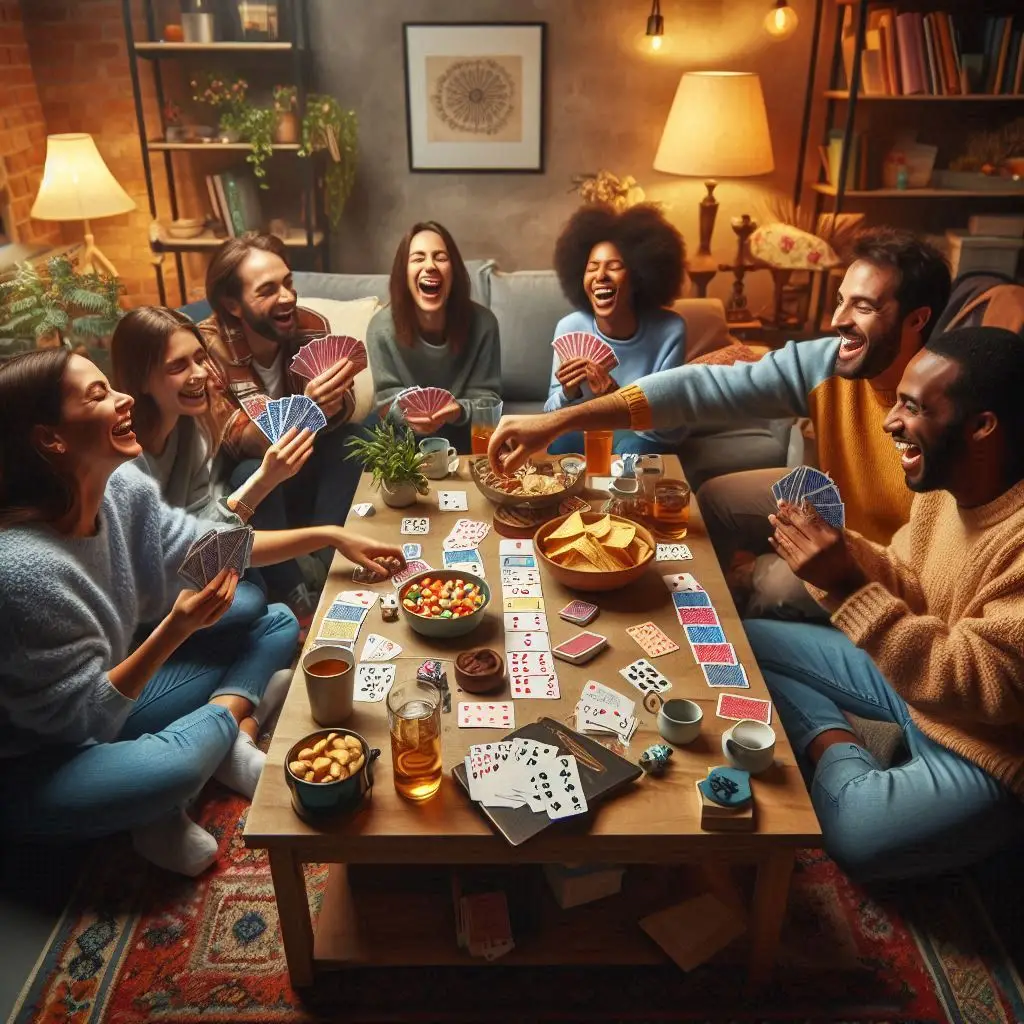

crimea-hotel.com– If you’ve ever held a deck of cards and wondered where to begin, you’re not alone. Most people enter the world of card games through simple, approachable classics—the ones you can learn in minutes, enjoy with anyone, and replay endlessly without growing tired of them. Asking “what are some basic card games?” is really the same as asking which games form the foundation of the entire card-game universe.
And surprisingly, many of these simple games have survived for generations because they’re easy to teach, rely on just enough luck to stay unpredictable, and bring people together faster than any board game ever could. Somewhere in the middle of learning these games, players also start asking broader questions about What Are Card Games?—but for now, we focus on the basics: the games anyone can pick up, even on their first day holding a deck.
Below is a detailed, human-written guide that groups basic card games into categories that make sense for beginners, casual players, and curious newcomers who want to explore without feeling overwhelmed.
Why Basic Card Games Matter More Than You Think
The beauty of basic card games is that they don’t require deep strategy, memorizing complex rules, or hours of practice. You just sit, shuffle, deal, and the fun begins. These games teach the fundamentals—matching, sequencing, turn-taking, probability, bluffing, quick thinking—all without the pressure found in competitive formats.
They also act as gateways. Someone who starts with Go Fish may eventually fall in love with Rummy. A fan of Slapjack might later get hooked on Speed. Small steps, but meaningful ones.
Family-Friendly Card Games Everyone Knows
These are the games you probably grew up with—the ones that appear at picnics, school recess, and weekend gatherings.
Go Fish
Go Fish is one of the easiest card games ever invented. Players simply ask for cards they need to complete sets of four:
“Do you have any 5s?”
If the opponent has the card, they must hand it over. If not, the player draws from the deck. The charm of Go Fish isn’t in strategy—it’s in the guessing, the small victories, and watching someone grin when they finally complete a set.
Old Maid
Old Maid’s concept is simple: avoid being the last person holding the odd card out. Every other card can be paired, but one “Old Maid” remains. Players draw from each other’s hands, hoping not to get stuck with the unwanted card in the end. It’s light, slightly chaotic, and perfect for kids.
Snap
Snap rewards quick reflexes. When two identical cards appear consecutively, the fastest player to shout “Snap!” gets the pile. It’s loud, silly, and always ends in laughter—exactly what basic card games are meant to do.
Ultra-Simple Games With Pure Chance
These games require almost no thinking at all. They’re perfect for relaxing or playing with younger kids.
War
War is as straightforward as it gets. Both players flip a card at the same time. The higher card wins. Occasionally, a tie leads to a dramatic “war,” where multiple cards are placed face-down and the final card determines the victor. There’s zero strategy—but 100% suspense.
Slapjack
Slapjack blends reflexes with luck. When a Jack appears, the first person to slap the pile wins the stack. Miss the timing, and you’re out. It’s chaotic, fast, and full of mis-slaps that make the game unexpectedly hilarious.
Basic Games That Introduce Real Mechanics
These games are still easy, but they teach principles used in more advanced card games later on.
Crazy Eights
Crazy Eights might be the ancestor of modern UNO. Players match either rank or suit, and Eights act as wild cards. It’s a shedding game—get rid of all your cards first. Even with simple mechanics, players quickly learn timing, card management, and little bits of strategy.
Beggar My Neighbour
A traditional British game where certain cards (Jack, Queen, King, Ace) trigger “payment rounds.” Although mostly luck-driven, the back-and-forth exchanges make each turn entertaining. It’s old-school, light, and uniquely charming.
Beginner-Friendly Classics With Slight Strategy
These aren’t complex, but they introduce concepts like sequencing, pattern recognition, or planning ahead.
Rummy (Basic Form)
Before you reach Gin Rummy or Canasta, the basic version is simple:
-
Make sets (same rank)
-
Make runs (sequential cards of the same suit)
It’s intuitive once you’ve seen a few examples. And because there’s some thought involved, players experience that “aha” moment when they lay down their first smooth combination.
Speed (Two-Player Fast Game)
Speed lives up to its name. You race to get rid of all your cards by placing them in ascending or descending order. There’s almost no time to think; you rely on quick reactions and instinct. It’s great for short, high-energy sessions.
Basic Card Games You Can Play Alone
Solo card games are perfect when you want quiet, personal gameplay that feels like solving a puzzle.
Klondike Solitaire
The classic. Players build four foundation piles from Ace to King while managing a seven-pile tableau. Anyone who’s used a Windows PC has probably played this at least once. It’s relaxing and quietly rewarding, especially when a clever cascade opens up an entire column.
Pyramid Solitaire
Pyramid introduces basic arithmetic into the mix. You remove pairs of cards that total 13, gradually dismantling the pyramid structure. It’s easy to learn, slightly challenging, and perfect for mental warm-ups.
Easy Global Card Games That Don’t Get Enough Attention
Simple card games exist far beyond Western decks. Some international favorites are just as easy and deserve a place in beginner collections.
Scopa (Italy)
A lively Italian matching game where you capture cards from the table by matching their value. It’s simple enough for beginners but feels more tactical than Go Fish. Scopa rewards awareness and observation.
Koi-Koi (Japan)
Koi-Koi uses hanafuda—beautiful floral Japanese cards. The simplified version is surprisingly accessible: collect valuable combinations and decide whether to “Koi-Koi” (continue) or end the round. Even newcomers can enjoy it quickly.
Basra (Middle East)
Players pick up table cards by matching or combining values. A special move called “Basra” clears the entire table at once. It’s satisfying and very easy for beginners to grasp.
Why These Games Are Still the Best Entry Point
Basic card games endure because they carry traits that modern games often forget:
-
They’re fast.
-
They bring people together instantly.
-
They don’t require reading rulebooks.
-
They scale from kids to adults without losing fun.
Most importantly, these games teach fundamental card concepts—matching, sequencing, turn order, reading tempo—without intimidating newcomers. They’re the warm welcome every player needs before entering deeper worlds like Rummy variations, trick-taking games, or collectible card games.
When someone asks what are some basic card games, the real answer is that basic card games are the backbone of every card-playing hobby. From Go Fish and Crazy Eights to Solitaire and Speed, these games teach rhythm, pattern recognition, and the joy of simple competition. They’re timeless because they work—whether you’re playing in a living room, at school, or during a quiet solo break.
Once you’ve tried a few of these, you’ll find it much easier to explore more complex games, or even entire genres you never expected to enjoy. The gateway is simple; the journey beyond it is endlessly fun.